
Economy
Money is counted in gold, silver and copper, and every price is a sum of them, such as “1 gold 20 silver 5 copper”. One silver is about a medieval penny, so prices follow those of England from 1300 to 1450: food sells by the kilo, a man’s wage is a few silver a day, and armour is dear. What is in a chest is coin:
| Coin | Weight | Worth |
|---|---|---|
| Gold piece | 8 g, always pure | 100 silver |
| Silver penny | 4 g | 10 copper |
| Copper | 3 g | Small change, of no house |
Villagers deal in copper and silver, towns in all three, and lords in gold. Pennies are struck by a house. A penny passes at face in its kingdom’s lands, within 30 km of one of its towns, and at its silver content elsewhere. Coin weighs in the train: a thousand gold is 8 kg as pieces and 400 kg as pennies. You spend the worst coin first, and you are paid in pieces with the change in local pennies.
A kingdom short of wages debases its silver a tenth at a time, down to half fine, and restores it a tenth when it has five days’ wages in hand. Each debasement loosens its towns. A house can call its older issues in: after a season (16 days) the old pennies are worthless in its lands.
| Town tab | What it does |
|---|---|
| Changer | Gold pieces to the town’s pennies (97 a piece), pennies to gold (104 a piece), other kingdoms’ pennies to the town’s; the changer keeps 3 in 100 |
| Mint | Called-in pennies to new silver at their fineness, less 5 in 100 |
If you lead the kingdom that holds a town and owe no other kingdom, its mint is yours: strike silver finer or baser, or call older issues in.
Payday is 8:00 each morning. Each army pays its men’s daily wages from its chest, and each squad leader’s again:
| Type | Daily wage |
|---|---|
| Infantry | 2 silver |
| Ranged | 3 silver |
| Cavalry | 6 silver |
| Ranged cavalry | 4 silver 5 copper |
When the chest runs dry, a quarter of the unpaid men desert and morale drops. Men paid in base silver lose morale too.
Hiring
Section titled “Hiring”| Where | Who | Price |
|---|---|---|
| Inn | Single men and bands; see Inns | Infantry 24 silver, ranged 30, cavalry 40, ranged cavalry 36; each man asks his own |
| Town garrison | Militia, gear a tier better; see Towns | Infantry 36 silver, ranged 45, cavalry 60, ranged cavalry 54 |
| Village | Nobody hires; levies go with their kingdom |
No army grows past the largest party size, 1,000 by default (Options, Gameplay), stretched 10% a point of its captain’s warfare.
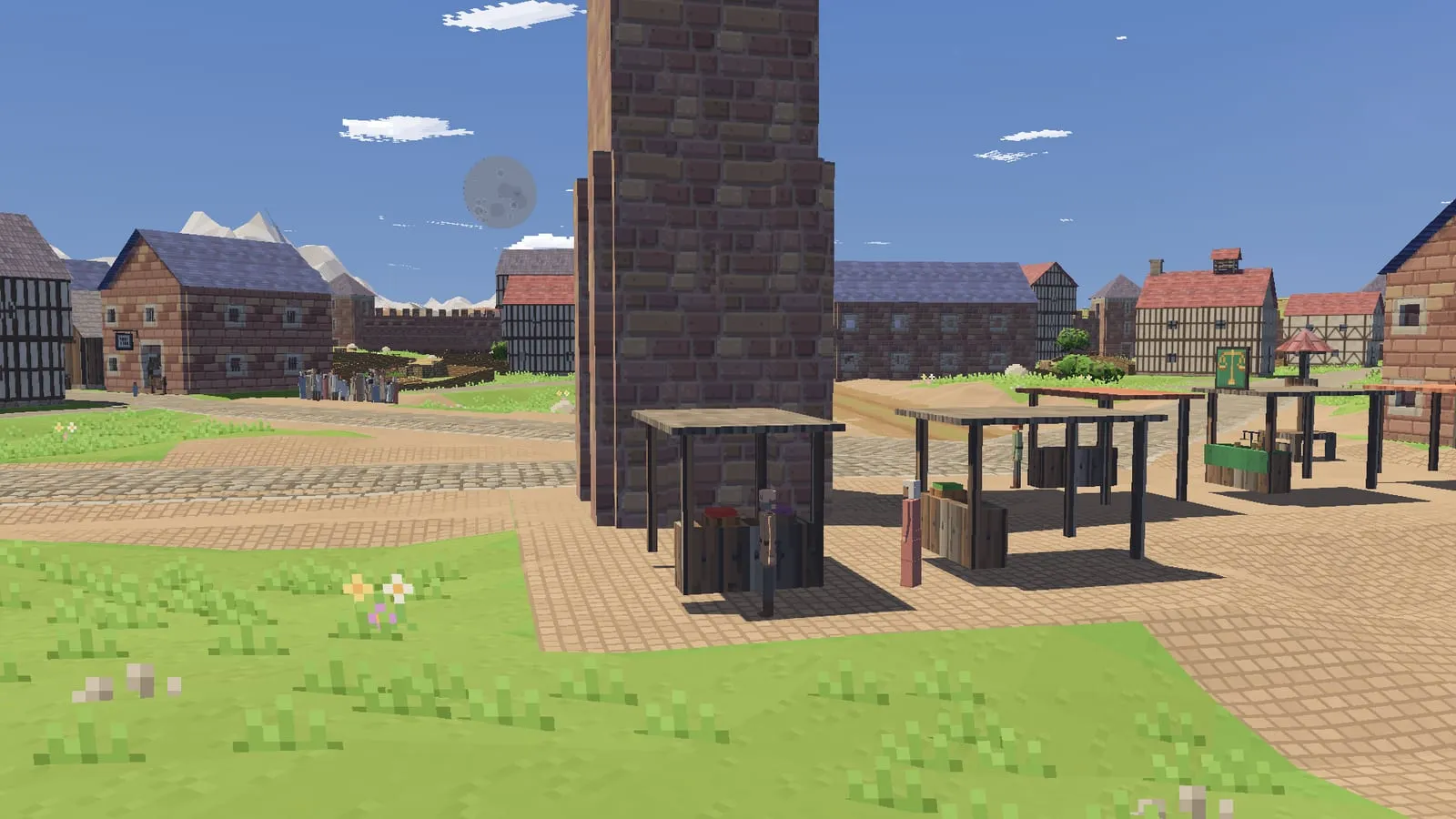
Prices follow stock. The next load costs the base price times the town’s usual stock over what it holds, from a quarter to four times the base. Stocks drift a tenth of the way back to usual each day, so carrying goods pays less each trip. Towns start with 200 gold, and the market pays from the town’s coffers, so it can run out of coin. It never sells its last load.
By a town that welcomes you, press T for the market: its stock on the left, your loads on the right. Slide a good right to buy and left to sell. The goods and their chains are on Goods.
Gear traders each keep their own purse (80 gold to start) and stock, and price the next piece by their stock the same way. See Equipment.
Every head of a place at home posts a job about every other day:
| Job | Pay |
|---|---|
| Clear the nearest hideout within 20 km | 2 gold and the den’s loot |
| Ride with a cart to another place | 1 gold |
| Carry a message to another head | 40 silver |
| Collect a debt of 80 to 240 silver | A fifth of it |
The Jobs tab lists the open jobs. Take one by sliding it right and pressing Agree, at most two at a time. A job must be done in four days. Come back to collect the pay. A debt you collected must still be in your chest to hand over. The Party screen’s Jobs tab lists what you hold.
Supply train
Section titled “Supply train”Every army has a train carrying its food, spare gear, goods and coin:
| Carrier | Carries |
|---|---|
| Pack mule | 100 kg |
| Wagon | 600 kg |
| Spare horse | 100 kg, led |
| Each man | Up to 25 kg, gear included |
| Pack, saddlebags | 25 kg each |
Each man eats 1 kg of food a day, the wounded too. In winter, with no grazing, every horse, mule and wagon ox wants 2 kg of fodder. An army short of food, or more than 1.5 km from its train, goes hungry: morale drops and men desert. An army at a town or village that welcomes it stocks up to six days of food.
The train marches 40 m behind its army at its slowest beast’s pace. Riding alone, your pack and saddlebags are your train.
If the enemy takes your train, your men have only what they wear and cannot change gear until you take an enemy’s train or buy a mule or wagon at a town’s stables.
Loot and spoils
Section titled “Loot and spoils”Beat an army and you take half its coin when it routs and the rest if you wipe it out, plus 8 silver for every man killed. You take its train: all of it if it was wiped out, or from one that flees, its wagons, spare gear, goods and camping gear.
Gear that is shed, such as gear left behind or taken off prisoners, falls in a pile. Any army within 150 m can gather from a pile into its train, a piece a man a game minute. A pile lies four days. Press G on the map within 150 m of a pile to open the spoils screen.
Where coin comes from
Section titled “Where coin comes from”Coin is made only by the start’s purses and coffers, bounties, the prey’s silver, job pay a place’s chest cannot cover, debasing and the mint, and what townsfolk pay for what they use. It is lost only with an army wiped out with no foe to take its chest, a recoinage’s cut, and called-in pennies.