
Marsh
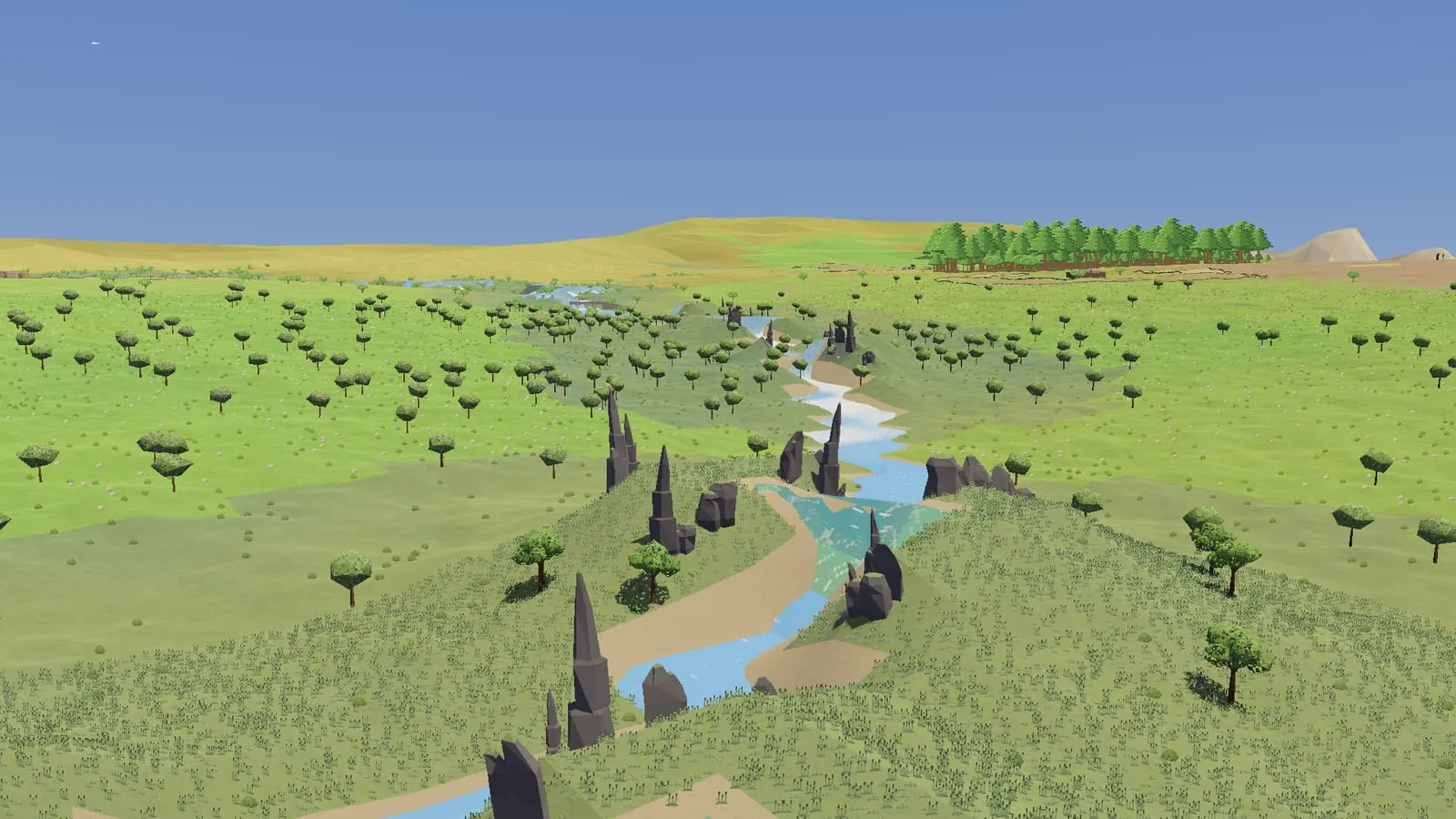
Wetland round lakes and in wet low ground.
| Warmth | 12 °C at sea level before the seasons and the weather; colder higher up |
| Tree cover | 10% of the ground |
| Hiding | Takes 30% of an army’s sight |
| Fertility | 0.3 (how well it feeds a settlement, 0 to 1) |
| Going on the map | 0.7 (marsh slows like snow) |
Fields
Section titled “Fields”Land like this sows, by how often:
| Sowing | Crops |
|---|---|
| Winter corn | wheat 2, rye 1 |
| Spring corn | oats 4, flax 3, beans 2, barley 1 |
See Harvest.
Flora and fauna
Section titled “Flora and fauna”| Tree | Share of the trees |
|---|---|
| Weeping willow | 55% |
| Alder | 45% |
- The trees stand few and far apart.
- Within 150 m of the sea: windswept coast pines, leaning inland.
See Trees.
Plants
Section titled “Plants”Thick reeds, grass and bushes.
On the lakes: reeds thick in the margins, lily pads in summer.
See Flora.
Animals
Section titled “Animals”Herds to the square kilometre:
| Beast | Herds |
|---|---|
| Boar | 0.04 |
| Birds | 0.2 |
Flocks of geese cross over in long Vs, north in spring and south in autumn. At dusk in autumn and winter, starlings gather over the reedbeds and fold into one great shape before they roost.
See Fauna.
Marsh slows an army on the map to 0.7 of its pace, and men and horses on the field the same. Wagons go at 0.7 too.