
Biomes
The disc is 82 km across. A new world can be made wider, up to twice that. Each world is made from a seed, and the same seed always makes the same world.
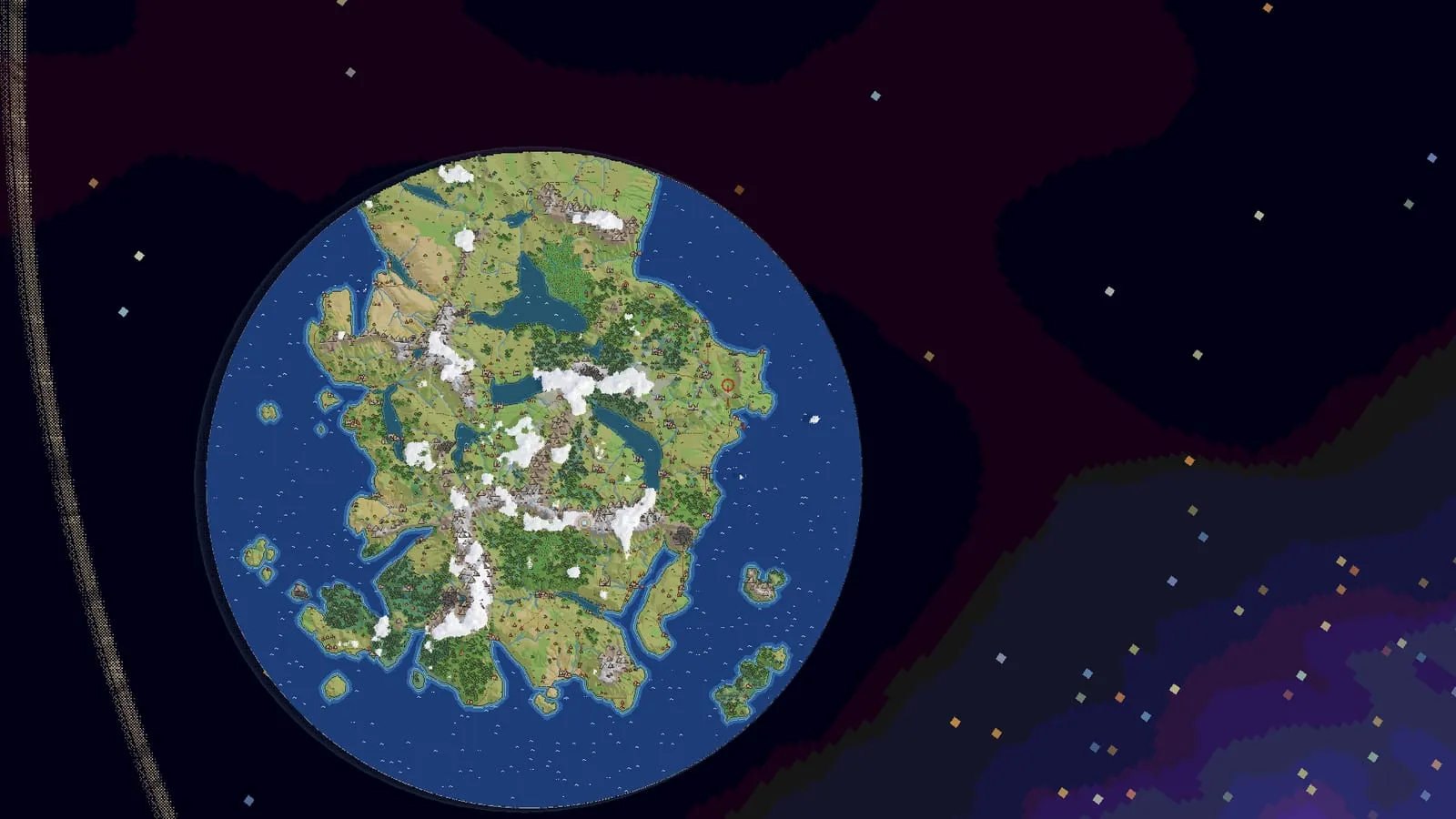
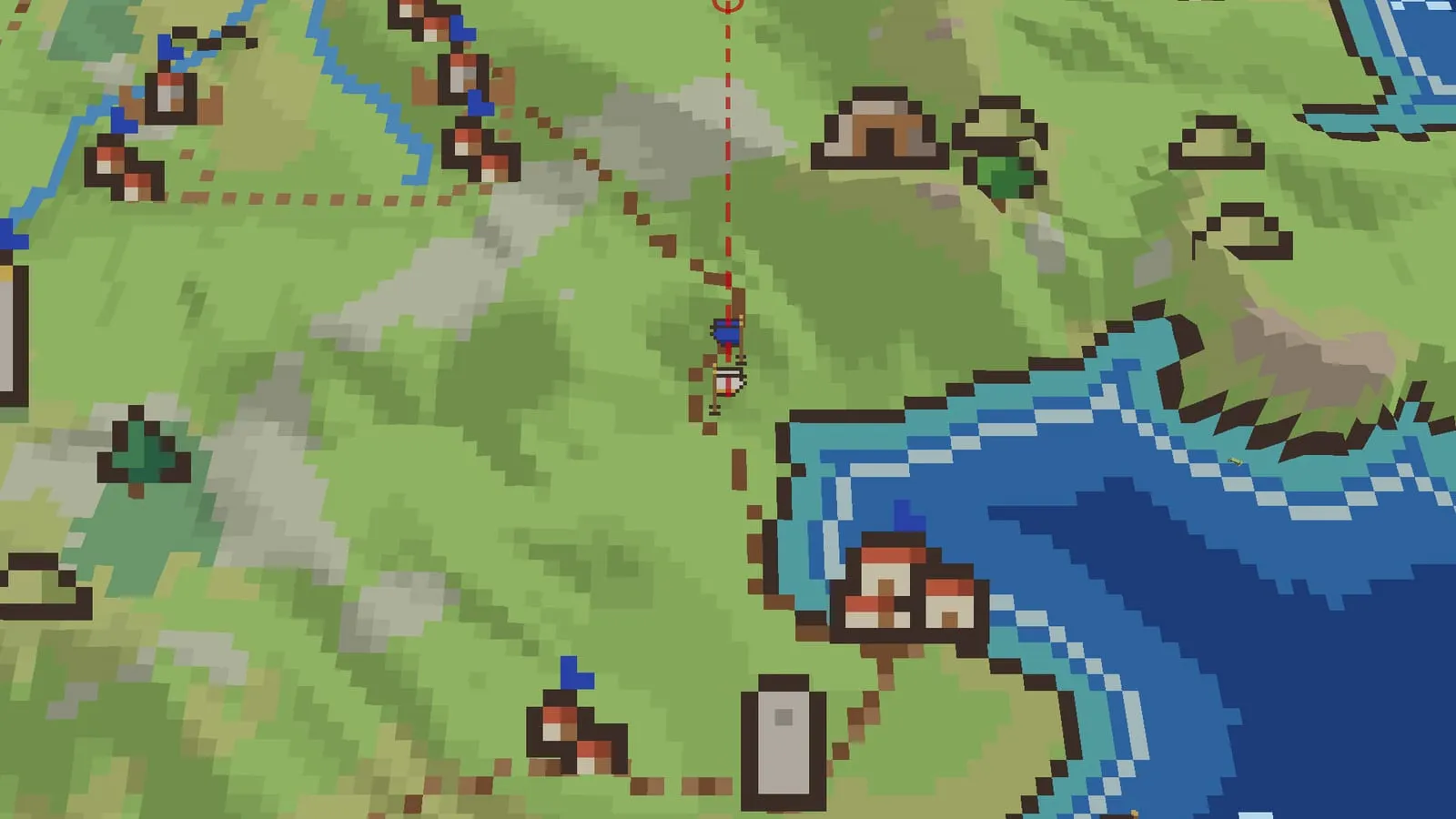
There are eighteen kinds of ground: sea, lake, river, beach, marsh, hills, mountain, snow, and nine climates from cold to hot: tundra, taiga, temperate rain forest, steppe, shrubland, temperate forest, desert, savanna and jungle. Each has its own colour, trees, crops and fertility, and some hide an army better than others. The ground under you is named on the screen, or “road”, or the kind of crossing.
Each land has its own page: Tundra, taiga, temperate rain forest, steppe, shrubland, temperate forest, desert, savanna, jungle, beach, hills, mountain, snow, marsh.
Trees are what slow you. Within about 2 m of a tree a man slows, down to three tenths of his pace in thick wood, and a horse far more, down to a tenth. On the map a forest slows an army by how thick its trees stand. Marsh and snow slow it to seven tenths. Roads keep a lane 10 m wide clear of trees on each side, and carts need a road through forest.
Mountains and volcanoes
Section titled “Mountains and volcanoes”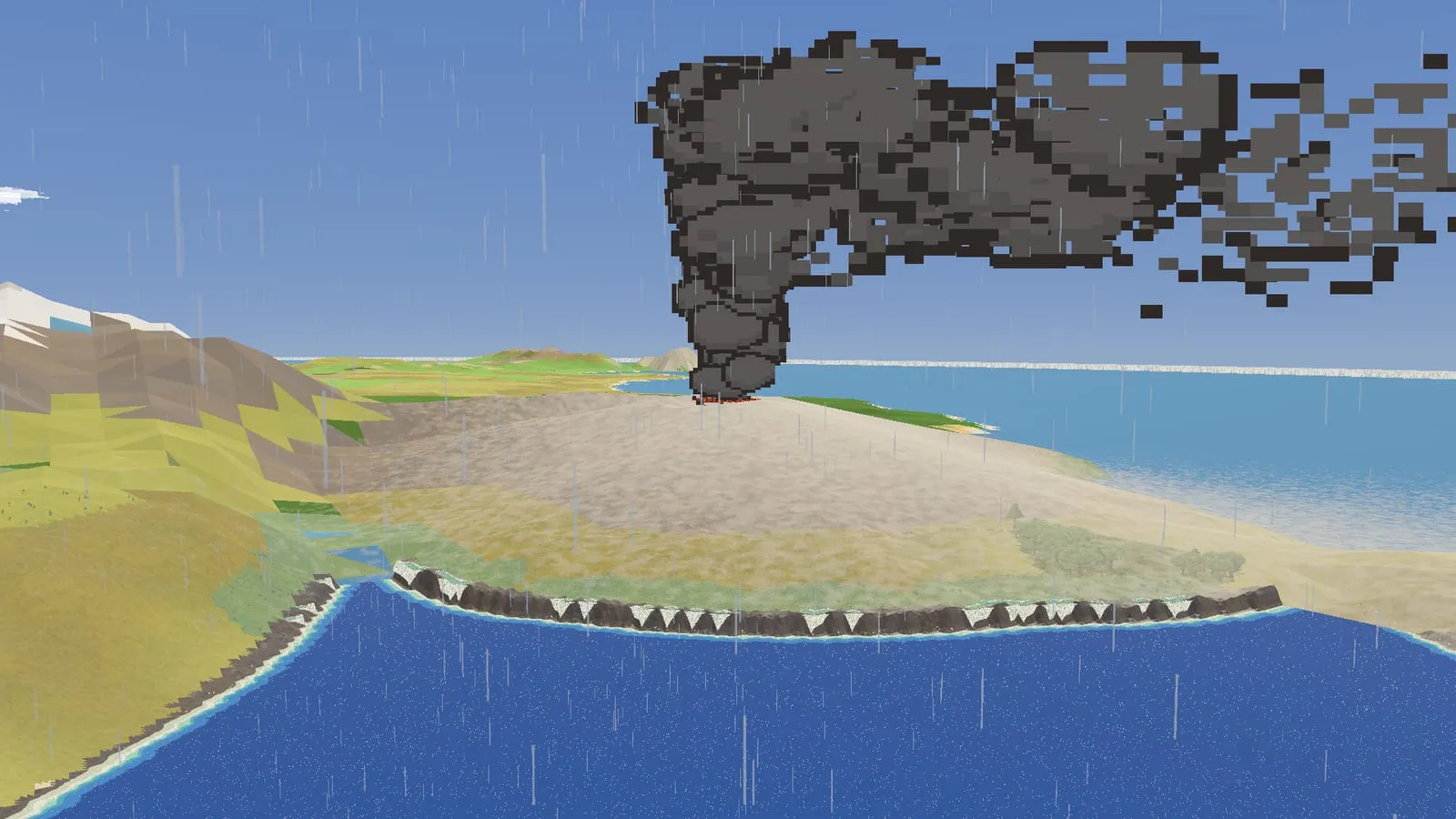
Mountain ranges stand round one continent, with isles off it, reached by ship. See Sailing. The highest peaks stand well over a kilometre. Valleys are cut into the ranges, with sharp ridges and fans of stone at their feet, and high up the rock steps down in flat ledges over sheer walls. Each range has its own rock: grey granite, red sandstone, pale limestone, or dark basalt near the volcanoes.
Two to six volcanoes smoke by the ranges, with crater lakes of glowing lava. Ash drifts downwind and the rain washes it off. Hot springs steam round them and along the rifts, and the grass round a spring stays green under snow.
Tors are piles of weathered granite, 6 to 28 m high, alone or up to four together, most on hills, mountains and open dry country, and never on a place, a road, a cave mouth or the Goddess’s bones.
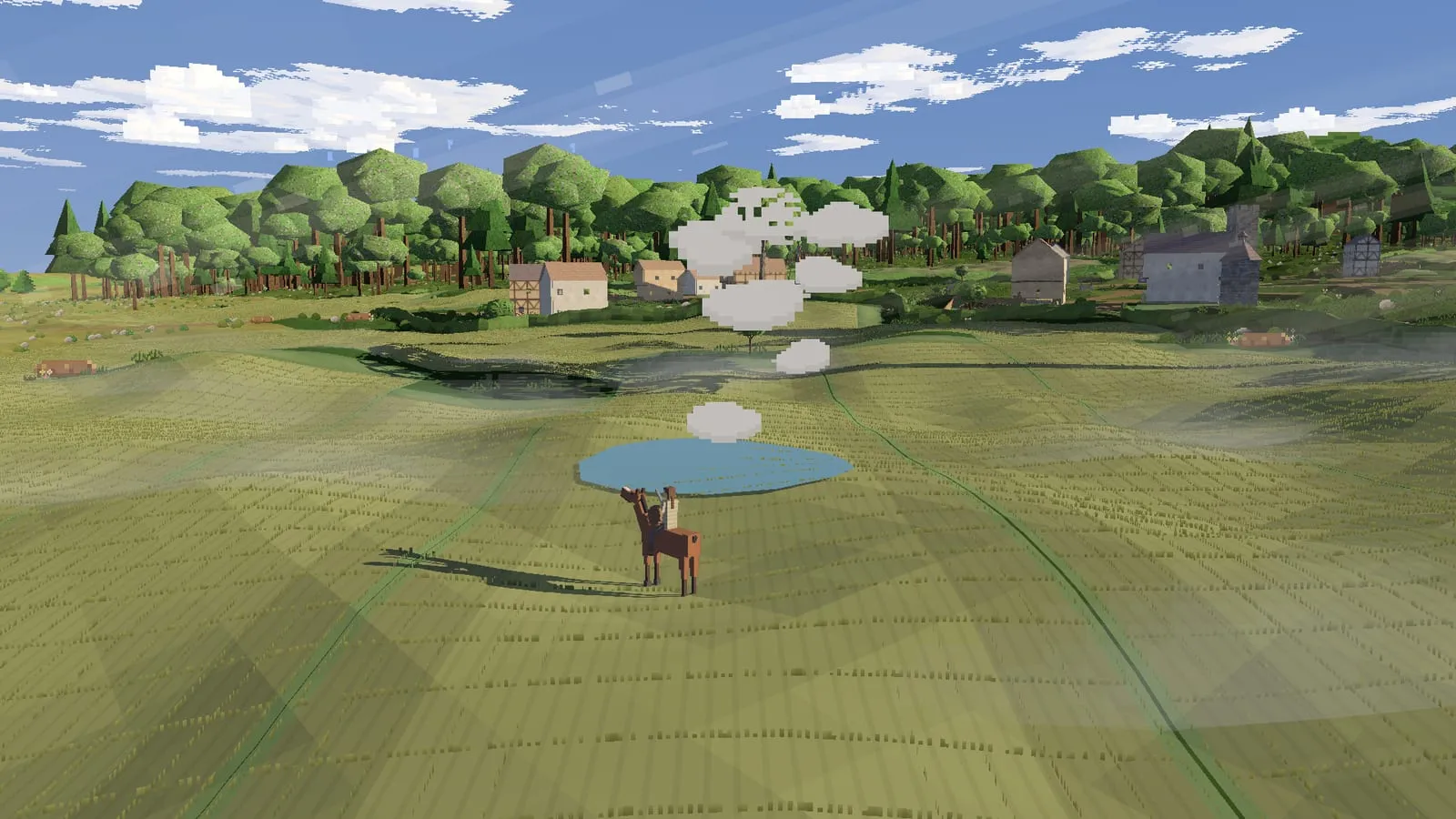
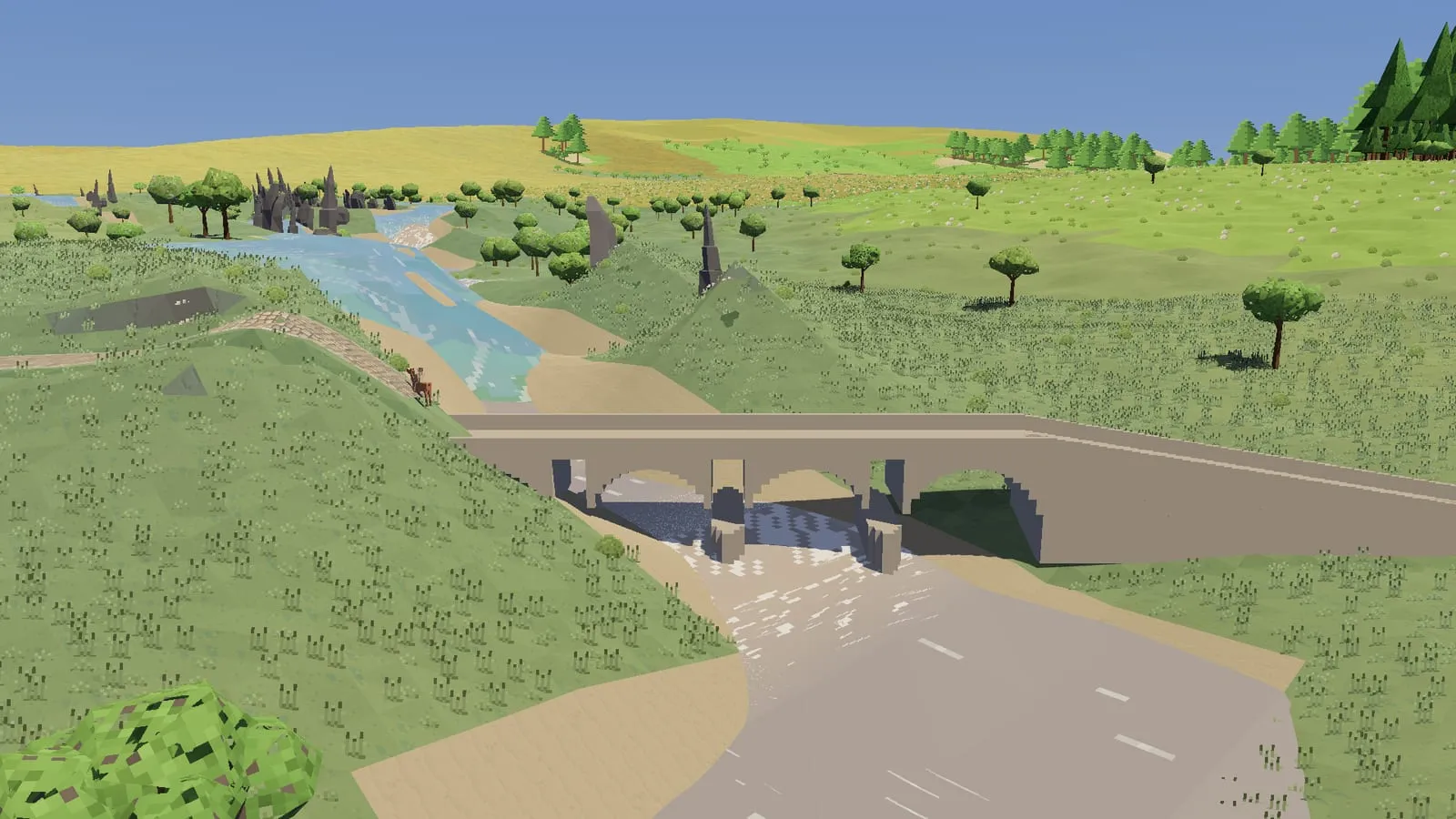
Rivers join into a few long ones that all reach the sea or a lake. High streams rise at a glacier or a tarn. Rivers fall over cliffs as waterfalls.
Rivers under 12 m wide are streams, waded anywhere. A wider river can be crossed only at a bridge or a ford:
| Crossing | Where |
|---|---|
| Ford | Tracks over any river, roads over rivers from 150 m, and some places off the roads |
| Stone bridge | Roads over rivers over 60 m, or within 2 km of a town; one in four has a gatehouse |
| Timber bridge | Other roads |
Fords and ferries are slow for an army. Rivers rise after heavy rain and with the snow melt, up to 2 m. A ford closes from 0.8 m up.
Coasts are sand on gentle shores, shingle on rough or cold ones, and rock and cliffs where the land rises steeply, with mudflats and salt marsh in sheltered bays. The tide bares mud and rock pools.
Steep ground
Section titled “Steep ground”| Slope | On foot |
|---|---|
| Under 30° | Your full pace |
| Up to 45° | A scramble at 60% |
| Up to 70° | A climb at a quarter |
| Steeper | Cannot be climbed |
A climber slips 5% of the time each second, and a slip tumbles you down until the slope eases. A drop or tumble of more than 3 m hurts: each metre past it takes a twelfth of your health, so 15 m is likely the end. A horse goes no steeper than 45°, and galloping down a slope over 30° it may fall and throw you.
Ice and glaciers
Section titled “Ice and glaciers”Lakes and ponds freeze after a few days of hard frost. Slow rivers freeze later, and fast rivers and the sea never do.
| Ice | Holds |
|---|---|
| 5 cm | A man on foot |
| 12 cm | A horse |
| 20 cm | An army with its carts |
Ice is thinner near the shore and over running water, and a thaw rots it. Ice too thin for you breaks once each time you step onto it, taking 35% of your health and killing one time in ten.
Glaciers lie in the high snowfields. Cross one faster than a careful walk (0.5 m/s) and a crevasse may swallow you, taking half your health and killing three times in ten.
The rim
Section titled “The rim”The disc has an edge. Most of the way round the sea runs out to it and pours over in falls that break into spray. On one side the continent reaches the rim and ends in a sheer cliff. Under the disc hangs rough rock with stalactites up to about 2 km long.
On foot you can walk or jump off the rim, and there is no coming back. A horse balks 2 m from the edge.
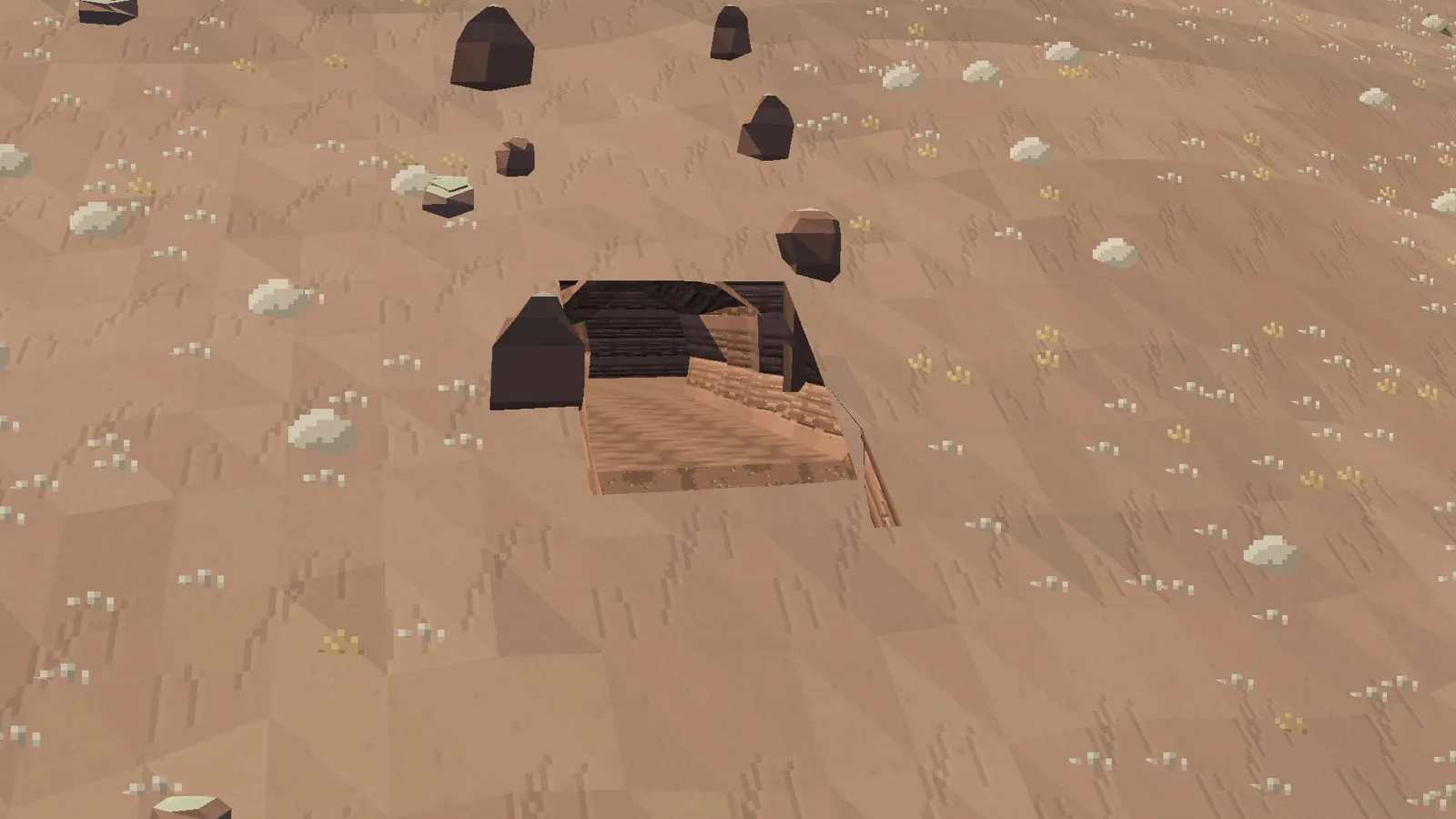
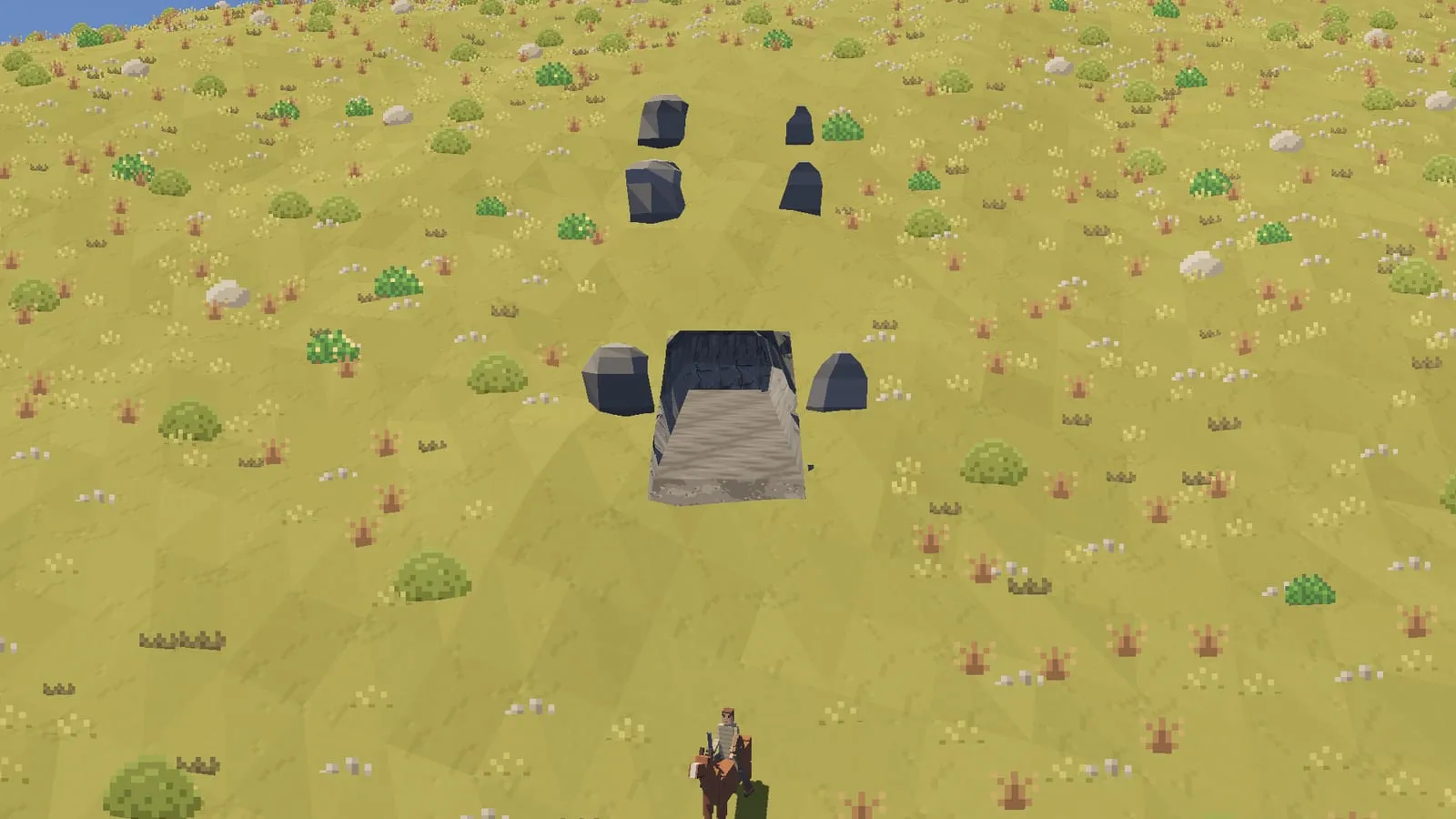
Caves open in steep hillsides, at least 600 m apart and 400 m from any settlement. There are three kinds:
- Shelters: a mouth and a chamber or two.
- Deep caves: long galleries going down to underground pools, some with a stream, bats and glowing fungi or crystals.
- Mines: timbered galleries with rails, within 5 km of a town.
Leave your horse at the mouth. A squeeze puts you on hands and knees at 35% of your pace. Inside it grows dark, and a torch burns at your hand.
Up to six deep ways go right down through the disc. A spiral stair inside the rock comes out through a stalactite’s side onto a ledge over the void.
Forests
Section titled “Forests”Forests stand in young, grown and old stands, with clearings and fallen logs. A few ancient groves have a world tree at their heart, some fifty metres tall. Villages fell a patch of nearby forest each season, and towns fell the high forest past their walls.
Lightning in dry summers starts wildfires that spread downwind and stop at water or in rain. Storms blow down patches of forest. Burnt or fallen land grows back: grass within weeks, then bushes, then full forest over about four years.