
Heavens
Everything in the sky follows the game’s clock alone, so co-op players see the same sky.
The sun
Section titled “The sun”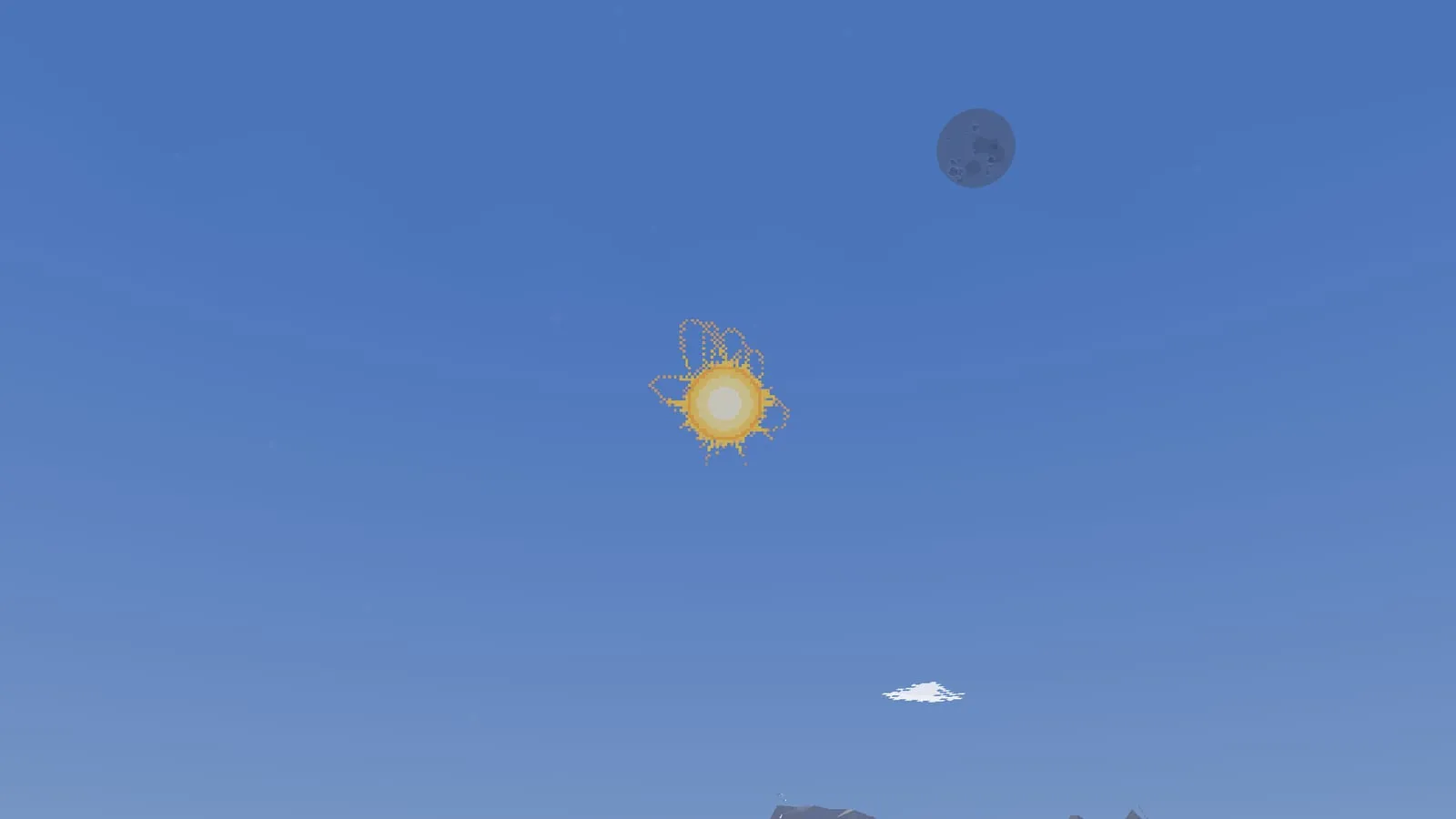
The sun circles the disc once a day, 150 km out, and passes under it at night. Night is the disc’s own shadow. Over the year its circle rises and sinks:
| Day | Daylight |
|---|---|
| Midsummer | About 16 hours |
| Midwinter | About 8 hours |
Every few hours the sun erupts. A day later the eruption reaches the disc and lights the aurora.
The moons
Section titled “The moons”| Moon | Look | Orbit | Size seen from the middle |
|---|---|---|---|
| Io | Small, silver | 4 days | Two thirds of the sun |
| Ma | Large, amber | 16 days | The sun’s own |
Io is said eye-oh, and Ma em-ae.
The moons are flat coins with their faces turned down to the land. They have no crescent: a face brightens and dims with the angle the sunlight strikes it. At the midnight that begins the 9th day of every season, both moons stand high and bright together. That is the festival, and the day of the season’s feast.
Eclipses
Section titled “Eclipses”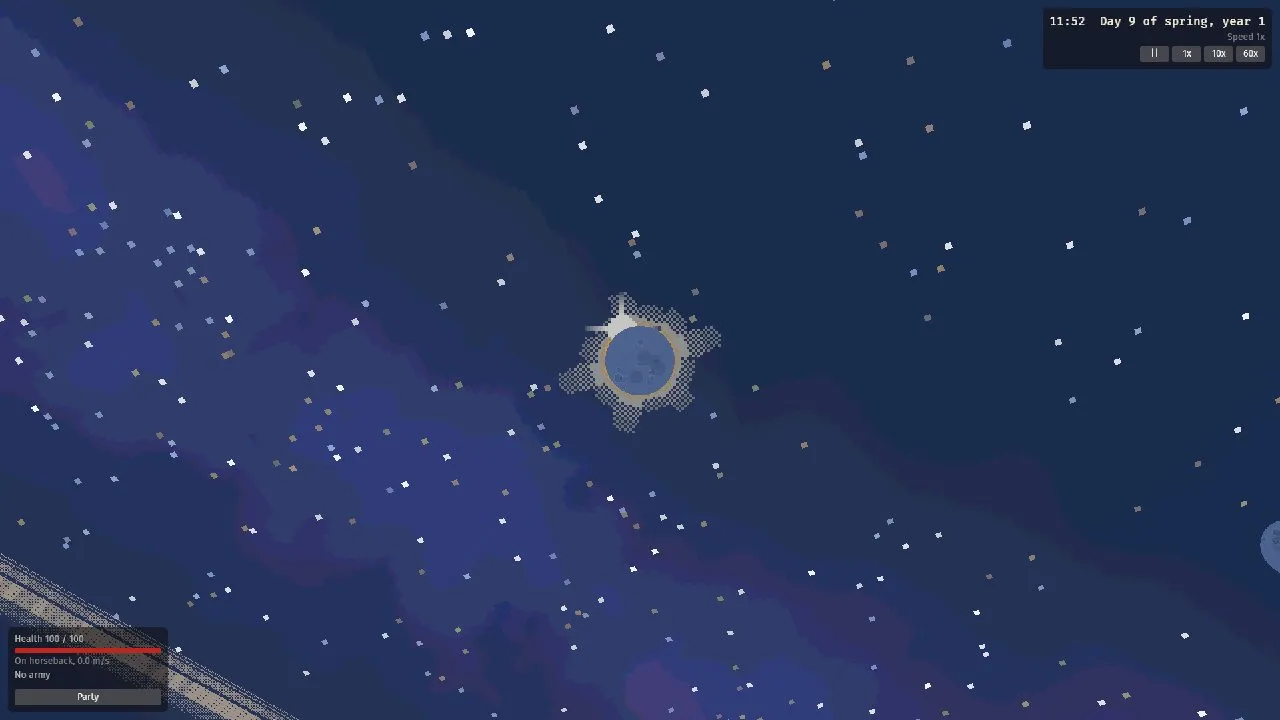
When a moon passes before the sun, its shadow sweeps across the land. Io is too small to hide the sun and only dims it. Once a year, at noon on the spring festival, Ma hides the sun whole. Its shadow crosses the land in under a minute, and a place under its path stays nearly dark for about 10 seconds.
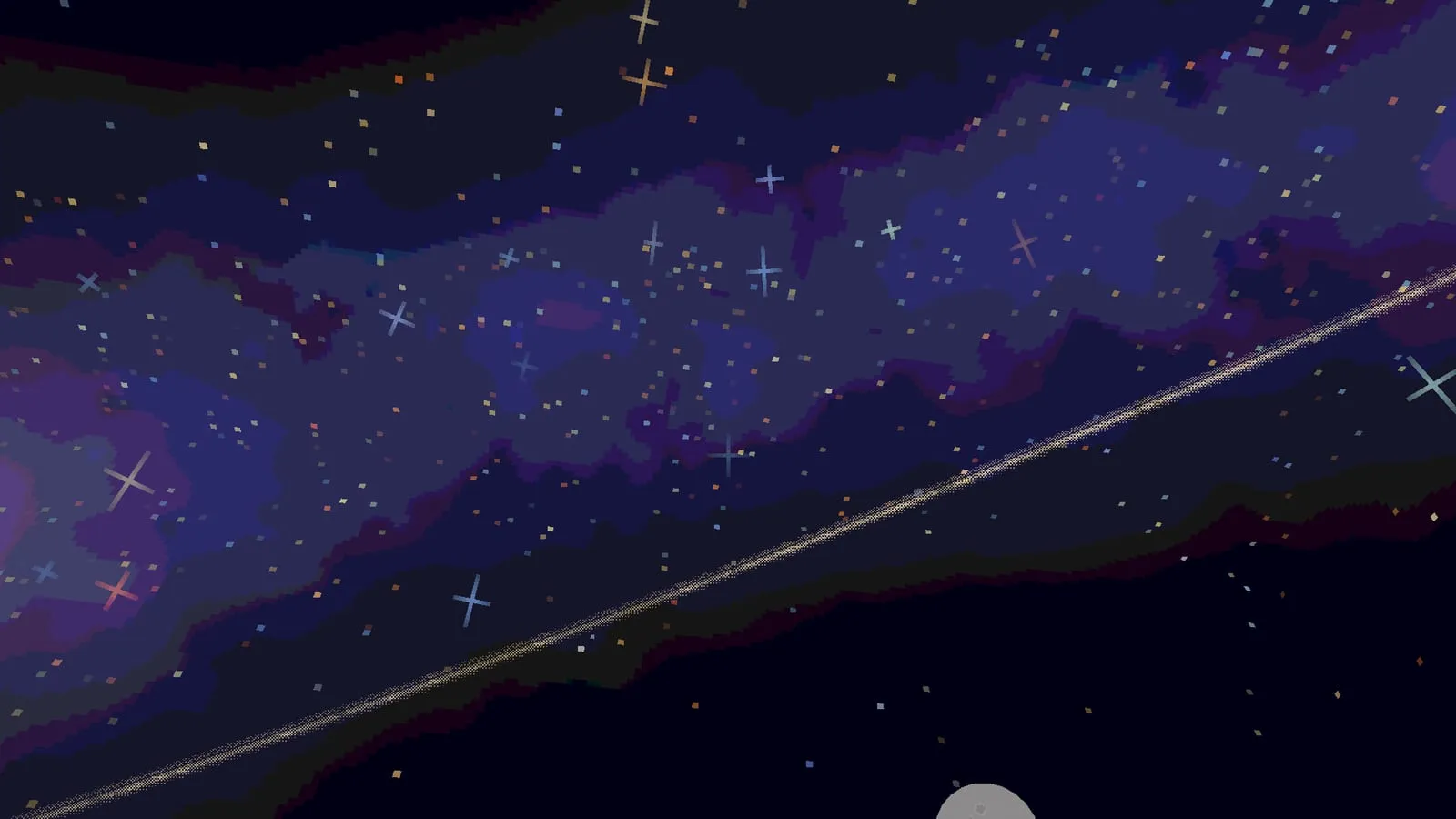
Night cuts how far armies see to 1.5 km, or 2.5 km under a full moon. Each full moon lights the land in its own colour.
| Sight | How often |
|---|---|
| Shooting star | Every 1 to 3 hours; one in eight is a fireball, seen at any hour |
| Comet | Every 4 years (256 days), for 12 to 20 days; the first on day 30 |
| Meteor shower | Night of the 11th of autumn, every 4 years |
| Dust ring shower | First night of winter, every year |
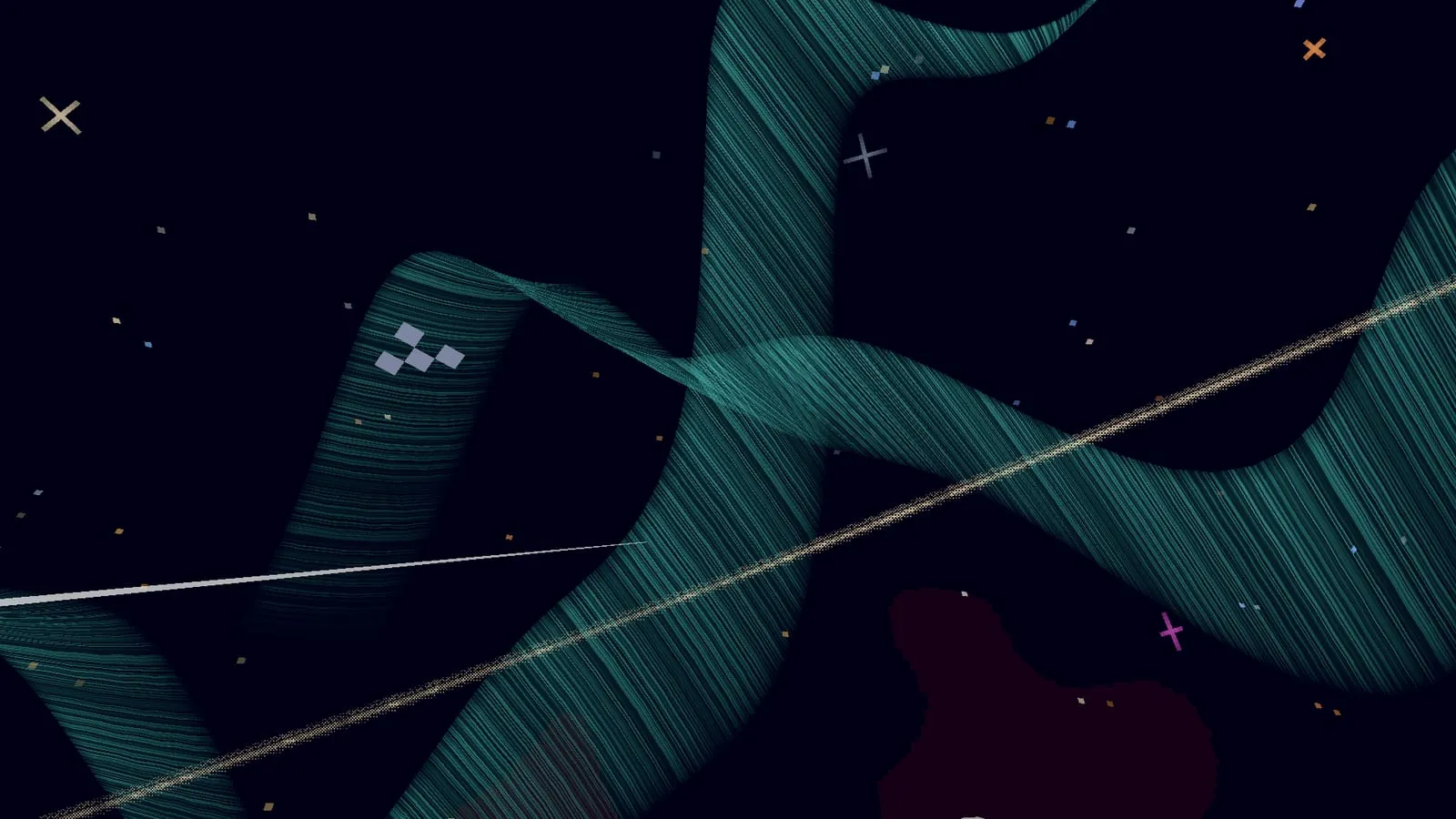
| Aurora | Nights after the sun erupts, stronger in winter |
| Nova | About every 2 years, gone in 2 days |
| Supernova | About every 8 years, fading over 4 days |
| Magnetar flare | Once or twice a year |
| Sky waves | 8 to 10 nights a year, fading over 10 hours |
Four pulsars blink among the stars, each at its own beat. A ring of pale dust circles the disc 160 km out, just past the sun.
The sea rises and falls with pulls from the sun (0.4 m), Io (0.6 m) and Ma (0.9 m). Each body lifts the sea while it is up and lets it sink while it is under the disc. The sea never moves more than 1.9 m from its level, and the festival’s spring tides run highest. Lakes and rivers have no tide.
The air
Section titled “The air”The sky is a dome of air the disc’s own size, standing on its rim and 20 km high. Outside it there is only the dark of space.