
Diplomacy
Kingdoms
Section titled “Kingdoms”Five kingdoms share the continent: Red, Blue, Green, Gold and Purple, each under its king or queen, who owes no one. Four free cities hold themselves. Ten other free captains, the Disclanders, ride the map from the start.
A town or castle taken in war goes to the lord whose army took it, or to the kingdom’s ruler when no lord leads it. A town keeps its mayor, who turns with it.
Every realm bears arms built in layers: a field, plain or divided in two colours, an ordinary (a pale, fess, bend, chevron, cross, saltire, chief, bordure or pile), one to three charges and a mark. Each kingdom has its own, and a lord bears his kingdom’s with a mark of his own. The arms are painted on the soldiers’ kit, the map’s flags, the castles’ banners and the shields in their halls.
Your band bears blank cloth until you make arms. The head of a realm opens the arms creator from the Realm screen’s Your realm tab: the banner on its pole with its blazon on the left, and on the right the field, ordinary and charge, each in white, yellow, red, green, blue, purple or black, and its cut: banner, pennon, swallowtail or gonfalon. It warns when the heralds would frown: colour on colour, or metal on metal. Bear these arms raises them. Arms you make go with your Disclander from world to world.
The feudal chain
Section titled “The feudal chain”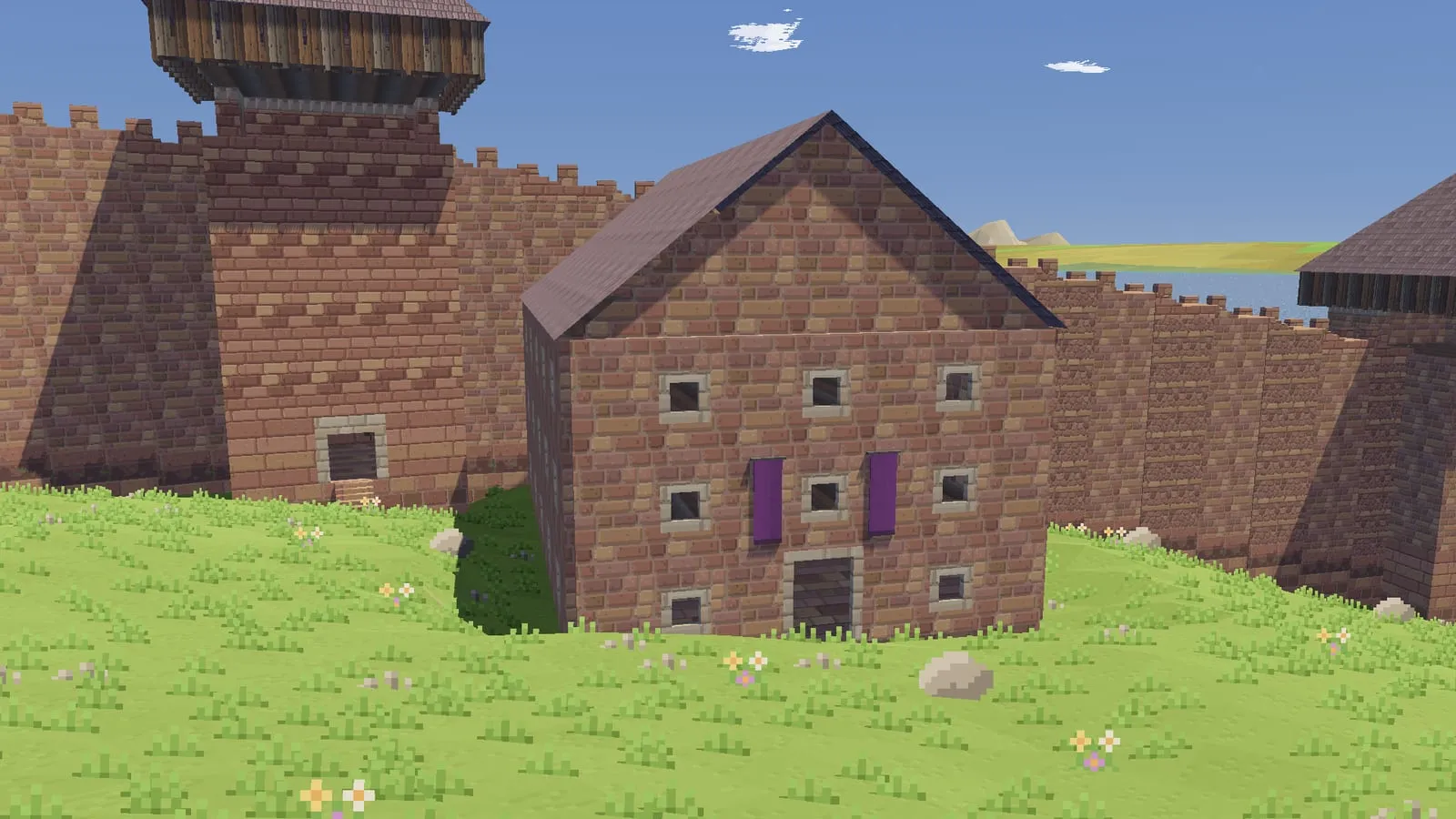
| Head | Holds | Owes |
|---|---|---|
| King or queen | The kingdom and its seat | No one |
| Castellan | A castle | The king |
| Knight | A manor and its villages | The castle |
| Mayor | A town | Its castle, or the seat for a capital |
| Reeve | A village | Its manor, or its castle |
Every head is a person with a name, a face, the skills of the office and a record. Half are women, titled Lady. Knights lead retinues and their manor’s levies, castellans lead border raids, and lords lead their hosts.
When a head’s army is wiped out, he is killed (10%), taken (55%) or gets away. When it routs he mostly rides on, now and then wounded, taken (10%) or killed (3%). A captive is ransomed after 10 days for what his seat can pay:
| Head | Ransom |
|---|---|
| Reeve | 50 |
| Knight | 150 |
| Mayor | 200 |
| Castellan | 300 |
| Lord | 1,000 |
A dead head’s seat stands empty 3 days, then an heir takes it.
Free and bound
Section titled “Free and bound”A village drifts toward how bound it should be by its kingdom’s men within a day of it. Below 0.2 it is free and sends no one when the banners are called. A town drifts between free and bound to the castle that claims it, a tenth of the way each day: its kingdom’s men within 10 km against the town’s militia and wealth. A free town keeps its taxes.
Calling the banners
Section titled “Calling the banners”The kingdoms fight with unpaid levies. Each kingdom calls its banners at the start and again 8 days after its host breaks up. The lord’s host forms at his castle with a guard of 30 spearmen, 15 archers and 15 riders. Every bound village sends its share of men up the chain, and bound towns their militia’s share. The host waits up to three days for its musters, then goes on campaign. After 16 days of service, or once its army is gone, the host breaks up and its bands go home.
If you lead a kingdom that holds a castle, you can call the banners from the realm screen.
Your oath
Section titled “Your oath”You start as a free lord, a kingdom of your own, at peace with every house. You can trade and hire in their towns. Falling on one of a kingdom’s parties or armies puts you at war with that kingdom for good.
To swear, ride to a lord’s seat while he is at home, open the Heads tab and press Swear oath (or O). You join his house and its wars, your towns and armies go with you, and a town your army takes becomes your fief. To renounce, go back to his seat and press Renounce oath (or L). Your fiefs go back to the lord. Your own loyalty never changes.
War and peace
Section titled “War and peace”Every pair of kingdoms stands somewhere between hatred and friendship. The kingdoms begin at old feuds. Raids, burnt fields and towns taken sour the standing, and a kingdom claims the towns it lost. A house goes to war over a claim, a soured standing, the Temple’s blessing, a broken pact or a head courted away from it.
A long war, lost men and hungry villages wear a house out. Then it sends an envoy to sue for a truce, then peace, with tribute if it is the more worn, and a town if it is beaten.
| Pact | What it means |
|---|---|
| Truce | The fighting stops |
| Peace | The war is over |
| Non-aggression pact | Neither attacks the other |
| Alliance | An ally attacked calls its allies in |
Pacts have no set length. They hold until a new one replaces them or a side breaks one, which costs its lord renown and its kingdom the Temple’s favour.
Envoys
Section titled “Envoys”Envoys ride the roads, through the night too. One caught on the road kills the deal, and falling on one is a crime. See Crime.
An envoy who comes to you waits 5 days for your answer on the realm screen’s Diplomacy tab, which opens on that tab while one waits. There you also send your own envoys, with tribute of none, 8, 20 or 40 gold (paid only if taken), and declare war. Each house shows its war (since when, why, whose doing, and both sides’ weariness) or pact, how it stands towards you, and the claims either way.
Courting heads
Section titled “Courting heads”No kingdom swears to another. Instead you win a castellan or knight over in person, at his seat, with gold or a fief, against his loyalty. Open the Heads tab of his castle or manor: it says how far he leans your way, and offers the least gold, with or without your smallest fief, that turns him. A castellan brings his castle and everyone under him, a knight his manor, and his old lord goes to war over it. An infamous lord’s word counts for less. The kingdoms and the Disclanders court each other’s restless heads too.
Loyalty
Section titled “Loyalty”Each day a castellan or sworn lord with a fief grows more loyal (0.02), and one without grows restless (0.03). Losing a fief in war costs 0.1. The Temple’s blessing adds 0.01 a day and its condemnation takes 0.015. Below 0.2 he defects to the most powerful other kingdom, taking his fiefs, everyone below him in the chain, and the armies he leads. Knights, reeves and mayors never drift.
Coalitions
Section titled “Coalitions”A kingdom’s power is its soldiers plus 100 for every town it holds. When the strongest kingdom passes 45% of everyone’s power, and at least two others have any, the others ally against it and stop fighting each other until it falls below 35%.
Disclanders
Section titled “Disclanders”Each Disclander starts as you do, alone on dry land somewhere with no coin, and has a temper from cautious to bold. They hire, trade, hunt bandits, take jobs and claim bounties. A Disclander with men hunts your armies when it outnumbers you enough: 1.8 to one for the most cautious, down to 1.2 for the boldest. Bold ones rob peaceful parties. At 120 men a cautious one swears to the nearest kingdom at peace, and a bold one marches on its enemies. Beaten, it raises a new band of 20 at home three days later.
What happens is known first near where it happened, and travels only with people on the roads. Your realm hears what is known where your armies stand, at your own towns, and from parties you talk to. What happens within 3 km of one of your armies is seen at once. Other houses are known only as last heard of. See Travellers.
Screens
Section titled “Screens”| Key | Screen | Tabs |
|---|---|---|
| J | Journal | Log; Battles; Almanac |
| U | Realm | Houses; Chain; War and peace; Diplomacy; Your realm; Temple; Law |
Your realm lists your oath, your fiefs, your vassals and their loyalty. Grant a fief to a vassal from there.